Everybody sells the word. Almost nobody sells the ratio.
Custom Bamboo Shirts prints bamboo viscose tees, bamboo-cotton blends, polos, woven button-downs, long sleeves and performance blends — quoted by the fibre content, the knit weight and the print method.
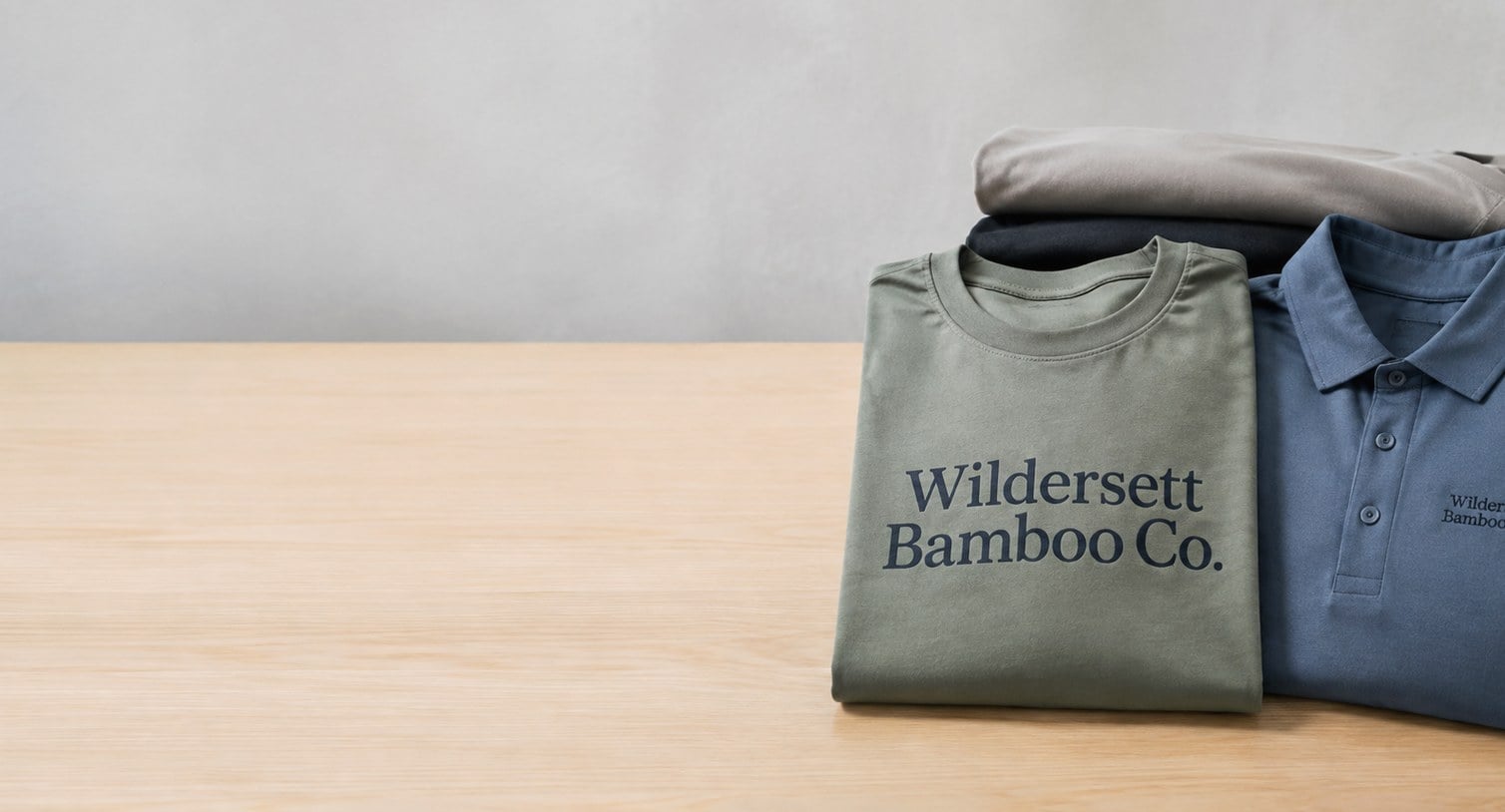
Bamboo apparel is bought on a feeling. Somebody hands you a shirt, you touch it, and you want your logo on that exact thing.
Then the order is placed against one word. Not a blend ratio, not a knit weight, not a print method — just “bamboo”, which describes none of the things that made the sample feel the way it did.
So the reorder feels different, the pale colours turn out thin, and the white print on the dark shirts goes pink two months later. None of that is bad luck. All of it is a specification nobody wrote down.
Why we exist
A bamboo shirt is decided by three numbers and one process: the blend ratio, the knit weight in GSM, the shrinkage allowance, and how the ink was put on. None of the four appears on a normal quote.
All four are settled before anything is made, and none of them is expensive to get right.
What bamboo legally means
Nearly all soft bamboo fabric is regenerated cellulose: the plant is dissolved into a solution and spun back out as fibre. US labelling requires the generic name for that, which is why a correct label reads rayon made from bamboo, or viscose from bamboo.
Only mechanically processed bast fibre may be labelled bamboo on its own, and it is rare and feels like coarse linen. Regulators have taken action over both the fibre wording and the antibacterial claims attached to it, so we label correctly and we do not print claims your care label cannot support.
Why the ink has to move with the knit
A bamboo viscose knit is slick and it drapes heavily. A thick plastisol slab printed onto it behaves like a plaque glued to a fabric that flows, and it cracks along the drape lines rather than across a fold.
So we print soft-hand where the fibre allows it, so the ink sinks into the surface instead of sitting on it — and where a design is simply too dense for the fabric, we say so at the mockup rather than shipping it and hoping.
Blends, and the pink print
Polyester in a blend brings real wicking, which bamboo does not do, and it brings one problem: disperse dye migrates under cure heat and turns white ink pink weeks after delivery.
A low-bleed underbase with a lower cure and a longer dwell prevents it completely. We build that into every dark blend as standard rather than selling it as an upgrade.
Feel is a number, not an adjective
Bamboo viscose absorbs moisture into the fibre rather than moving it to the surface. That is exactly why it feels cool and soft, and exactly why a loose pure-viscose knit holds sweat, dries slowly and grows in the wash.
A stated blend, a stated GSM and a stated shrinkage allowance are what make a shirt behave the same way on the third order as on the first.
What we will talk you out of
A huge solid back print on a woven shirt. A pure viscose polo with an unstabilised collar. A light knit in a pale colour for a clinic. A performance claim with no polyester behind it.
And anything certified — these are comfortable shirts, not antibacterial, antimicrobial, UV-protective, flame-resistant, medical or PPE garments, and not organic unless a certificate exists that we can show you. Where you need a certified garment we will say so and point you to the right supplier.
How we work
ASK
What the shirt is for, who wears it, and how it gets washed.
SPEC
Blend ratio, knit weight in GSM, shrinkage allowance and print method.
PROOF
Print proofed on the actual knit, not on a cotton blank.
MOCK
Free mockup within 24 hours.
SHIP
About 2 weeks, with the real date confirmed in writing before you commit.
Who we serve
Get in touch
Text or call George at (929) 605-4397, or email info@custombambooshirts.com. Free mockups, low minimums, and a lowest-price guarantee.
Win Free Stuff
Enter below for a chance to win plus receive 10% off your first order.
🎉 You are in!
We will text you your 10% off code. Good luck!